Timeline (1961-1970)
February 15, 1961 - The entire United States figure skating team is killed in a plane crash.
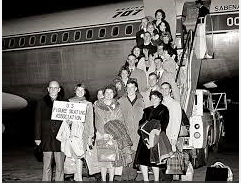
An entire team of athletes in search of their dreams, are killed in a horrible plane crash. A total of 72 people are killed in the accident. 18 members of the dead toll were U.S. figure skaters. The crash happened while attempting to make a scheduled stopover landing at the Belgian National Airport in Brussels. The exact causes of the crash were determined, although mechanical difficulties were suspected. The tragedy devastated the U.S. figure skating program and meant the loss of the country's top skating talent.
May 5, 1961 - The first U.S. manned sub-orbital space flight is completed
The commander in charge was Alan B. Shepard. Alan becomes the first American in space. The capsule was launched 116.5 miles above the earth. The launch of the capsule took place in Cape Canaveral, Florida. The flight only lasted 15 minutes before splashing down in the Atlantic Ocean 302 Miles from the Florida launch site. Twenty days after , President Kennedy announces his intention to place a man on the moon by the end of the decade.
August 13, 1961 - The construction of the Berlin Wall begins by the Soviet bloc
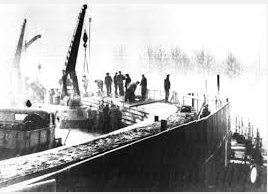
The construction of the wall segregates even further the German City. The wall began construction in a effort to stem the tide of refugees attempting to leave East Berlin. The main purpose of the communist government was to divide East and West Berlin. The wall caused a short-term crisis in the U.S.-Soviet bloc relations. The wall became a symbolof the Cold War. The wall lasted for twenty-eight years.
February 7, 1962 - The first sign of a looming Vietnam conflict emerges
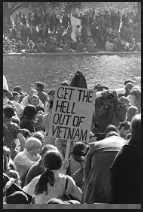
President Kennedy admits there is military presence in Vietnam. Military advisors would engage if fired upon. Things start to get heated among the US and Vietnam. People are not happy to be in the middle of another conflict. Protest begin to be more frequent alluring what was yetto come.
February 20, 1962 - Lt. Colonel John Glenn becomes the first U.S. astronaut in orbit in the Friendship 7 Mercury capsule.
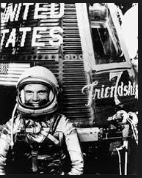
Lt. Colonel John Glenn circled the earth three times. The astronaut remained aloft four hours and fifty-five-minutes before returning to earth. The flight equalized the space race with he Soviet Union. Even the President Kennedy inspected the Mercury Capsule. The flight is regarded as one of NASA's most important flights in American History. The pilot became a national hero and a symbol of American ambition.
October 14, 1962 - The Cuban Missile Crises begins
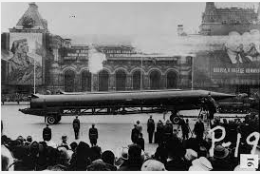
A crisis with Cuba begins as missile building is discovered. The Soviet Union is behind the missiles building offensive in Cuba. President Kennedy orders a naval and air blockade of military equipment to the island. An agreement is eventually reached wit the Soviet Premier Khrushchev. The removal of the missiles ends the potential conflict after thirty-eight days. This event is considered the closest the Cold War came to breaking into armed conflict.
November 22, 1963 The President John F. Kennedy is Killed
President Kennedy was mortally wounded by assassin Lee Harvey Oswald. The president was not able to recover from the shot to the head and was later pronounced dead. President Kennedy was at a motorcade in downtown Dallas, Texas when the incident happened. Vice President Lyndon B. Johnson is sworn into office later that day. Two days after the attack on the president, the assassin Oswald, was also killed on live national television by Jack Ruby while being transported in police custody. To this day many Americans remember Keneddy's assassination.
1964 - This year marked the end of the post-war Baby Boom
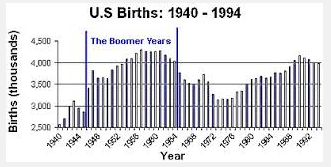
In the United States there were nearly 77.3 million births between 1946 and 1964. This era of very high number of births was named the Baby Boom era. As a result, the need or consumer goods expanded the economy over the next decade. Industries such as the baby gift industries and other services for families prospered. Department stores such as Sears and J.C. Penny's expanded into suburban markets. At one time in the 1960's one of every 200 Americans would receive a paycheck from Sears itself.
July 1, 1966 - Medicare, the government medical program for citizens over the age of 65, begins.
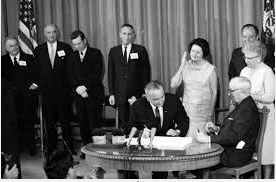
Medicare, authorized by title XVII of the Society Security Act, offered health insurance to almost all Americans age 65or older. Coverage consisted of hospital insurance (part A) and supplemental medical insurance (part B). Benefits on the program mirrored those then available from Blue Cross and Blue Shield plans. A payroll tax paid by employees, employers and the self employed funded part A. Part B insurance was open to all aged citizens and legal aliens who had resided in the country for 5 or more years. The monthly premium for Part B was $3.00 which at the time was estimated to be enough to fund 50 percent of part B costs. The Federal general revenues covered the balances after the monthly premium of Part B costs.
November 8, 1966 - The first black United States Senator
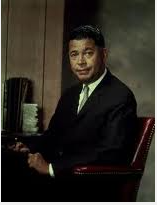
Edward W. Brooke became the first African American elected as a U.S. Senator. Edward was the first African American Senator elected in 85 years. Edward W. Brooke became the Senator of the state of Massachusetts. Brooke defeated his opponent Endicott Peabody by a landslide. Brooke served for two terms from 1967 to 1979. Brooke was the only African American to hold this position in the 20th century until 1993.
July 1967 - Black riots plague U.S. cities
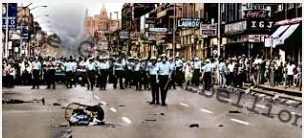
The black riots take a big toll in the lives of U.S. citizens. In Newark, New Jersey twenty-six-are killed, fifteen hundred injured and one thousand are arrested from July 12 to July 17. One week later a similar event tok over Detroit. In this instance, Detroit became known as the 12th Street Riots. Detroit had a tollof forty killed, two thousand injured, and five thousand left homeless after the riots. The riots are eventually stopped. It took over 12,500 Federal troopers and National Guardsmen to control the situation.
July 20, 1969 - The Apollo program completes its mission.
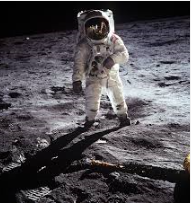
Neil Armstrong, United States astronaut, becomes the first man to set foot on the moon. The journey happened four days after the launch from Cape Canaveral, Florida. The vessel had to travel 240,000 miles in 76 hours to enter intoa lunar orbit. His Apollo 11 colleagues all became history along with him. A television camera attached to the craft recorded his progress and beamed the signal back to earth, while hundreds of millions watched in great anticipation. Armstrong is know for his quote "That's one small step for man, one giant leap for mankind."
November 21, 1969 - The Internet is invented
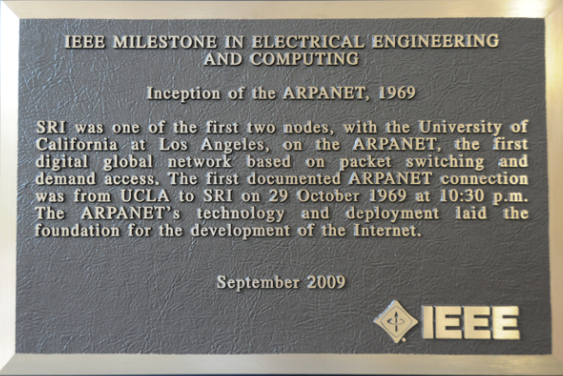
The internet previously called Arpanet is invented by the Advance Research Agency at the U.S. Department of Defense. The first operational packet switching network in the world was deployed connecting the IMP at UCLA and the Stanford Research Institute. By December 5, it included the entire four node system, with the UCSB and the University of Utah. Ultimately the Arpanet's technology laid the foundation for the development of the Internet.
